The Collective Power of Women - Reflections on hearing Gisèle Pelicot share her story
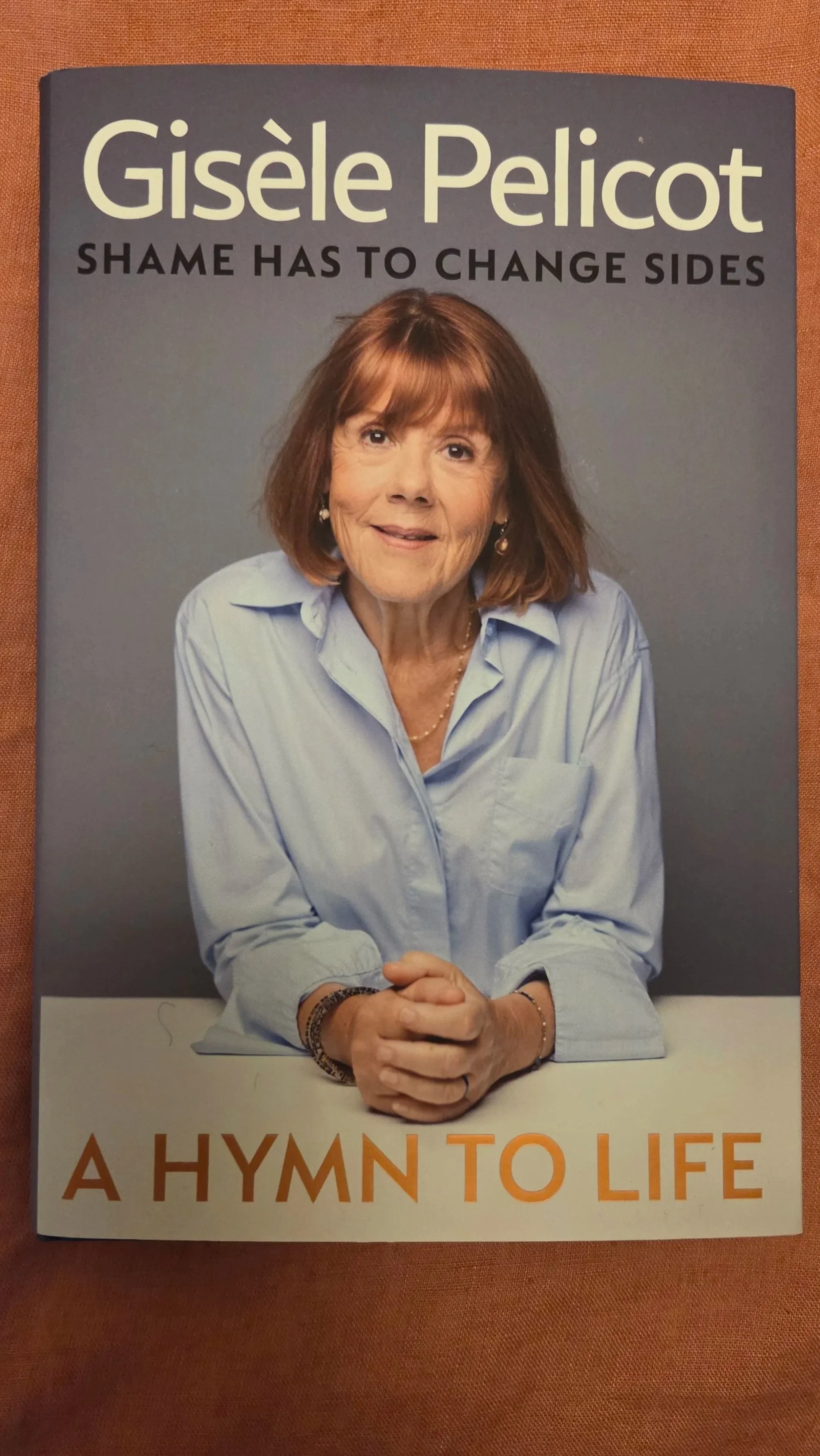
An image of the hardback book, A Hymn to Life: Shame has to change sides, by Gisele Pelicot, published February 2026
Trigger Warning - this post refers to sexual violence against women
There are experiences that you know will stay with you forever; last night was one of them. I was privileged to be in the audience at the Royal Festival Hall (London, UK) when Gisèle Pelicot was in conversation with Samira Ahmed, following the release of her memoir “A Hymn to Life: Shame Has To Change Sides” (https://www.southbankcentre.co.uk/whats-on/Gisèle-pelicot-a-hymn-to-life/). Not only were these two amazing women speaking candidly about the unspeakable things that Gisèle went through at the hands of her husband and the 50 men who he enabled to abuse her, but we also had three world-famous actors reading from her book, bringing her words to life in a powerful yet intimate way – Dame Kristen Scott Thomas, Juliet Stevenson and Kate Winslet.
I am still processing the whole experience and probably will be for some time yet. But what has struck me most in the hours since the event is the strength Gisèle found from the support of the women around her, most of whom she didn’t know, during the trial. As the trial continued, more and more women attended the public hearing or stood vigil outside the Palais de Justice, wanting to witness this unprecedented event and to offer Gisèle their support. Perhaps many came with stories not dissimilar to her own.
Gisèle spoke of the letters many of these women wrote to her during this time, and how, in the evenings after the court procedures, instead of reading the news or going down the rabbit hole of social media, she read these messages. They gave her the strength and courage to continue attending the court proceedings the whole way through, rather than for just the first two weeks, which was her original plan. (Oh, and another thing that helped her through – she binge-watched the Netflix series The Queen’s Gambit, taking strength from the female protagonist’s journey to become a chess champion. I wonder if Anya Taylor-Joy, who played the role of chess champion Beth Harmon, knows of the effect she had on Gisèle at this most stressful of times?)
I’ve been reflecting on the impact of the auditorium being so full of women (I reckon the audience was 90-95% women), and whether we became like those women outside the Palais de Justice in Avignon. Gisèle received a standing ovation as she and Samira Ahmed came onto the stage, and once everyone was settled in their seats (audience and speakers alike), Samira gently said to Gisèle something like, “I know it’s huge, but try to think of it just as a big room full of friends.” Whether these words were planned by Samira or not, this simple sentence seemed to capture the moment, perfectly catching the feeling in the (very large) room. By the end of the evening, it did indeed feel as if we were a large group of friends.
Throughout the event, at regular intervals, the audience spontaneously broke into applause, acknowledging key moments from Gisèle’s story and fight to reattribute shame about rape to the perpetrators. She seemed moved by these shows of appreciation, and at the end of the evening, to another standing ovation, she took a meaningful amount of time to really look at the audience, taking everyone in, from the stalls to the highest circle of the auditorium, blowing kisses in that beautifully French way to one and all. I felt she wanted to see everyone, not just gaze at a sea of faces. She seemed truly grateful for the support and love from this large room of friends.
I came to the event to hear Gisèle’s story in her own words, to share a space with a truly remarkable woman who has changed the way French law sees rape (https://www.theguardian.com/world/2025/oct/29/french-parliament-votes-to-add-consent-to-law-after-Gisèle-pelicot-case) and who has done such powerful work in making society rethink its views around sexual violence against women and girls. I wanted to show her my gratitude. What I hadn’t expected to come away with was an appreciation of her gratitude and love for women – women like me – who came out in solidarity and support for her at this most gruelling time in her life. It is a compelling reminder of the power and strength women have when we come together. I’d like to think that I know that, but it is very useful and important to be reminded of this at every opportunity. Thank you for reminding me of this, Gisèle.